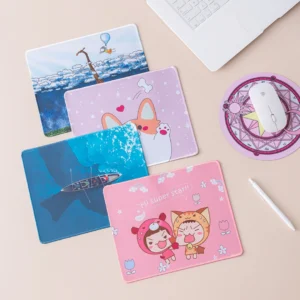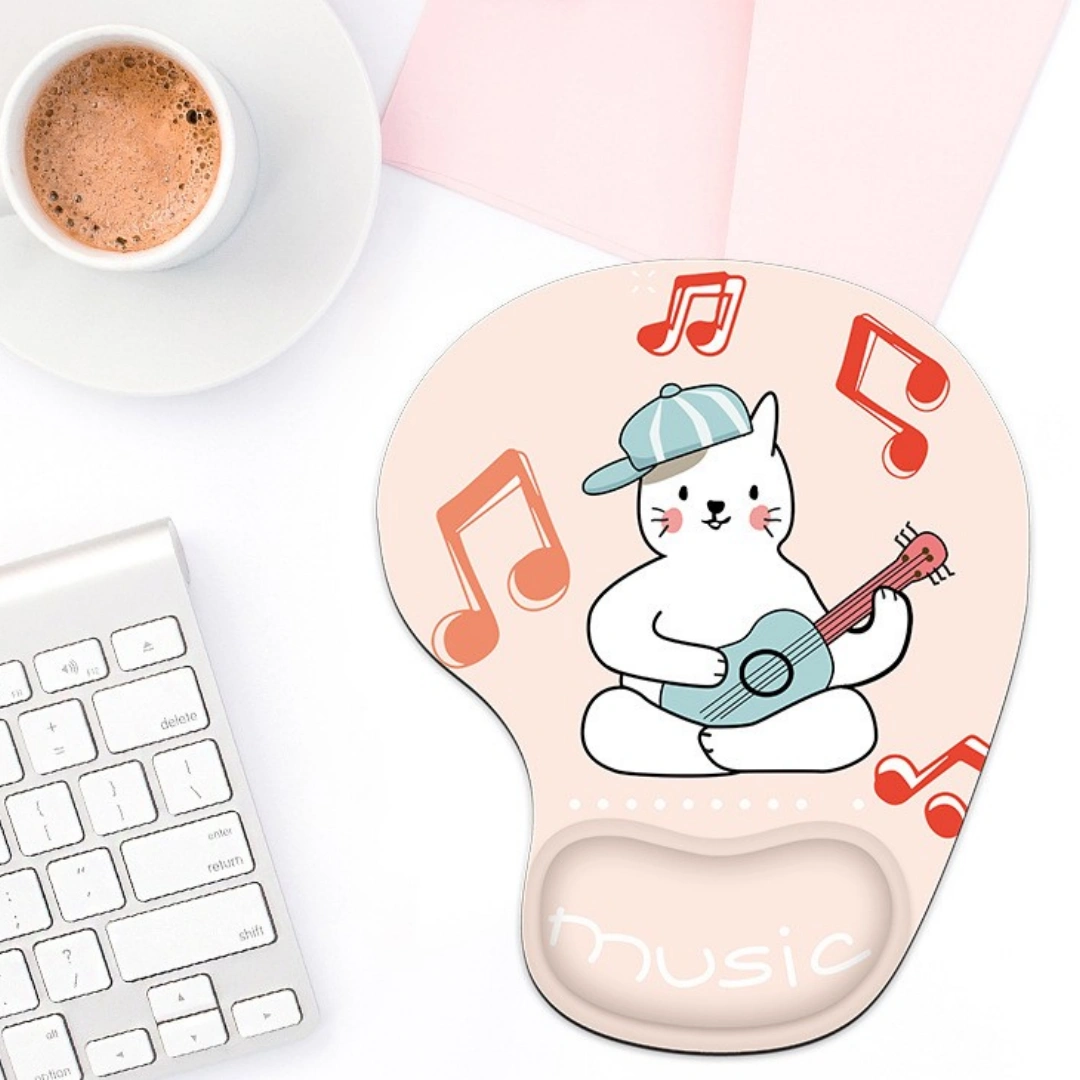
Introduction: why“Custom Mouse Pad” seems simple, but the most prone to problems?
In the corporate custom gifts and brand periphery, the mouse pad has been“High frequency option”: moderate price, practical, long exposure time, design space, seems to be a hardly wrong product.
But in practice, custom-made mouse pads are one of the categories with relatively high rates of complaints and rework. Common problems include:
The color of the finished product is significantly different from the design draft
Mouse pad feel bad to use, customers do not want to use
There is a clear smell, affecting the office environment
Bulk products don’t agree with samples
Delays in delivery affect events or exhibitions
These problems are not rooted in the product itself, but in:
The customization process is not clear, and the key nodes lack professional judgment.
In fact, customizing mouse pad is a highly process-oriented and standardized work. As long as there is a clear understanding of each step and confirmation at key points, the risk can be minimized.
Stage 1: preparing for customization-defining the“Why”
1. A clear purpose of customization is the starting point of all work
Before you begin any discussion of parameters, you must first answer the question: Who are these mouse pads for?
Common customization purposes include:
Corporate branding (long-term exposure)
Promotional gifts (short-term distribution)
Customer feedback or business gifts
Employee benefits or internal alignment
IP co-branded or brand affiliate sales
Depending on the purpose, it can have a big impact on subsequent decisions. For example:
Trade show giveaways focus more on cost and portability
More attention to customer gifts texture and brand image
Internal employees pay more attention to durability and comfort
2. Identify who uses it and how often
Questions for further confirmation include:
Does the user work on the computer for long hours
Whether involves the design, the programming, the game and so on high frequency operation
Is it an office, a home, or a public space
The higher the frequency of use, the higher the requirements for material and feel.
The second stage: product structure confirmationーー size, shape and overall positioning
1. Classification of common sizes and shapes of mouse pads
From the mainstream of the market, custom mouse pads can be divided into the following categories:
Small size mouse pad (portable)
Standard size mouse pad (general purpose)
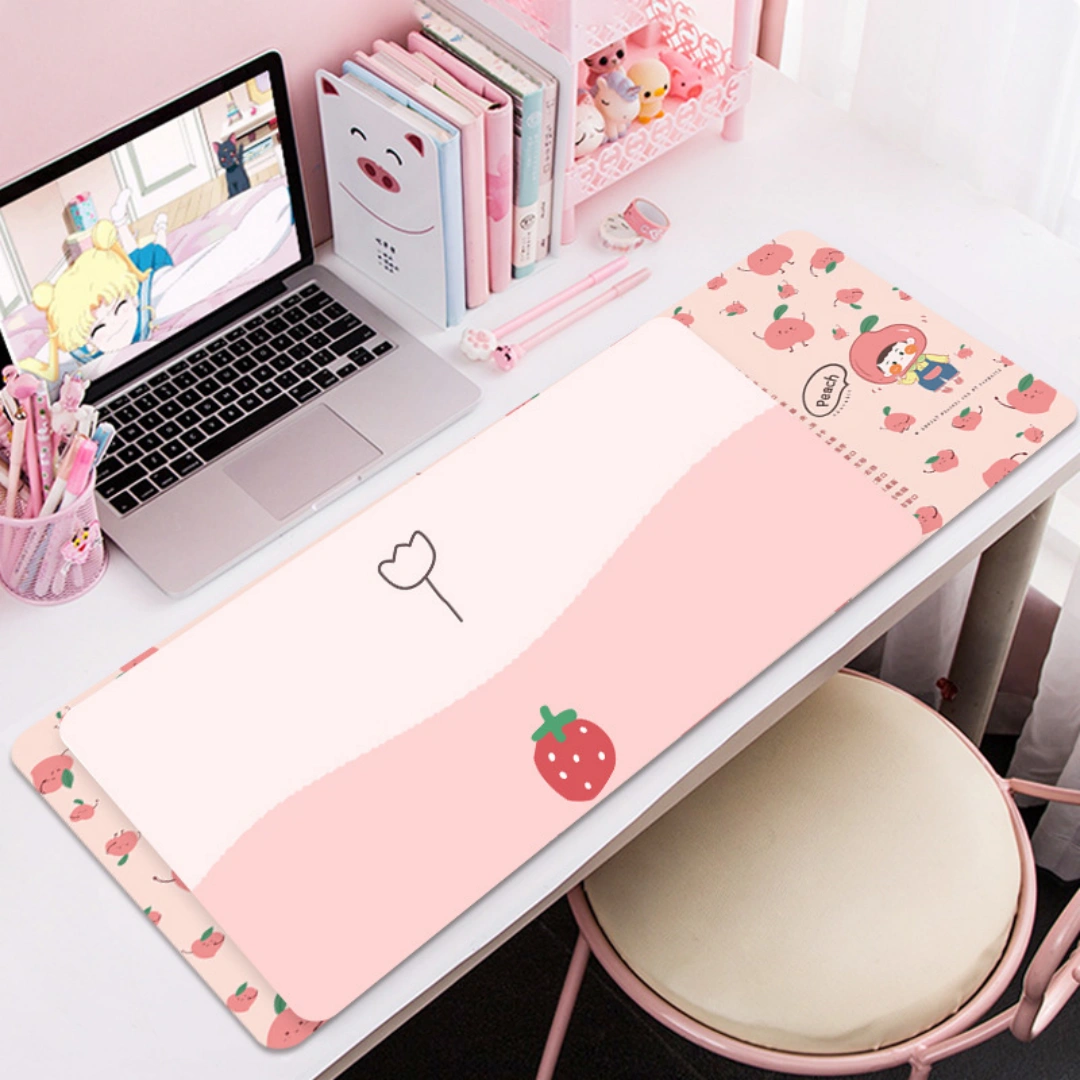
Extended Mouse Pad
Table Mat Mouse Mat (keyboard + mouse)
2. The critical logic of sizing
Size isn’t about“Bigger is better,” it’s about matching usage scenarios:
Is there enough desktop space
Whether the keyboard needs to be overwritten
Whether to carry or distribute frequently
Once the size is determined, it will directly affect:
Cost of materials
Unit Price Range
Packaging
Logistics costs
This is a key parameter that must be identified early and not modified repeatedly.
Fourth, the third stage: the choice of material structureーー the core step of the decision experience
1. Detailed selection of surface materials
The surface material directly affects:
Mouse positioning accuracy
Smoothness and control
Degree of wear resistance
Common surface materials include:
Regular fabric (cost effective and most widely used)
Fine weave (more precise, higher end)
Special coated fabric (partial functionality)
It is important to recognize:
Compatibility with optical/laser mouse
Is the surface easy to clean and dirty
2. The importance of the bottom material (most often overlooked)
The bottom material determines whether the mouse pad is“Usable”:
Is it skidproof
Does it age easily
Does it smell
Common base materials:
Natural rubber
Synthetic rubber for environmental protection
PVC (found in low-end products)
Poor bottom quality is one of the main reasons mouse pads are not used.
Stage 4: thickness and edge treatmentーー key details in determining“Texture”
1. The effect of thickness selection on experience
Common thickness ranges:
2mm: thin, thin, low cost
3mm: mainstream with the best balance
4-5mm: higher end, softer touch
Thickness directly affects:
Comfort
How Easy is Hemming
Overall“Sense of class” of the product
2. Detailed treatment of edges
Not locking the edge: low cost, but not very durable
Selvage process: anti-fluffing, anti-stripping, visual more delicate
For:
Long-term use
Project with high brand image requirement
Hemming is almost a“Must-have”.
Stage 5: Design Document preparation-this is where 90% of the problems are
1. What does the design usually consist of?
Corporate logos
Brand colors
A slogan or slogan
Background image
Professional requirements for design documents
Give preference to vector files (AI, PDF)
Bitmaps need to be high resolution
Fonts should be curved
Common mistakes in design
The LOGO is placed right in the middle, affecting usage
Too Many Colors make it difficult to print
Important information is located in areas of high frequency friction
Design principles can be summed up in one sentence:
Design must serve use, not be used at the expense of the brand.
Stage 7 and Stage 6: Selection of printing process and management of effect expectation
1. Comparison of mainstream printing processes
Thermal transfer: for complex patterns, gradients
Screen Printing: for simple, monochrome designs
Digital printing: suitable for small batch customization
2. Critical judgment points for process selection
Pattern complexity
Number of colors
Budget and quantity
The need for durability
Different processes in:
Color reproduction
Life
Unit Price
The difference is obvious.
Eighth, the seventh stage: proofing confirmationーー the most important and most easily overlooked step
1. Why do you have to make proofs?
The purpose of a sample is not to“See what it looks like”, but to confirm:
Actual color effect
Texture and thickness
Anti-skid property
Whether there is an odor problem
2. Key checklist during the proofing stage
Accuracy of dimensions
Is the design clear
Is there a noticeable colour difference
Is the edge neat or not
Bottom non-slip effect
Any unconfirmed details can be blown up into a problem in mass production.
Stage 8: confirm the mass production parameters and enter the mass production
After sample confirmation, the following shall be confirmed in writing again:
Final dimensions
Material and thickness
Printing process
Number
Unit Price
Delivery date
This is a key step in preventing discrepancies between the sample and the bulk product.
Stage 9: Packaging Scheme selection and brand presentation
1. Common packaging forms
Naked packaging
Opp Bag
OPP pocket + card insert
Color box packaging
2. Packaging selection logic
Whether to use it for distribution
Is It for retail distribution
Need to improve brand image
Packaging isn’t just about protecting the product, it’s also about:
The first step for consumers to get in touch with the brand.
Stage 10: Quality Inspection, logistics and final delivery
1. Key points of pre-factory quality inspection
Print integrity
Dimensional tolerances
Edge treatment
Anti-skid property
Blemish
2. Logistics and delivery considerations
Domestic vs. international transport
Whether to ship in batches
Whether customs clearance documents are involved
Planning Logistics in advance can help avoid delivery risks.
Summary of the most common potholes in customizing your mouse pad
Start designing without knowing what it’s for
Focus on the price, not the experience
Direct mass production without proofing
Ignore bottom textures and smells
Design complexity beyond the capabilities of the craft
Conclusion: the process is clear, custom can be controlled, can be copied, can be upgraded
Custom Mouse Pad is not a one-time sale, but a can be standardized, process, long-term reuse of the brand action.
If You:
Clear each process node
Identify key steps
Look at the product from a“Long-term use” perspective
It can be customized mouse pad, from a problem-prone work, into a stable, controllable, continuous value of the brand input.