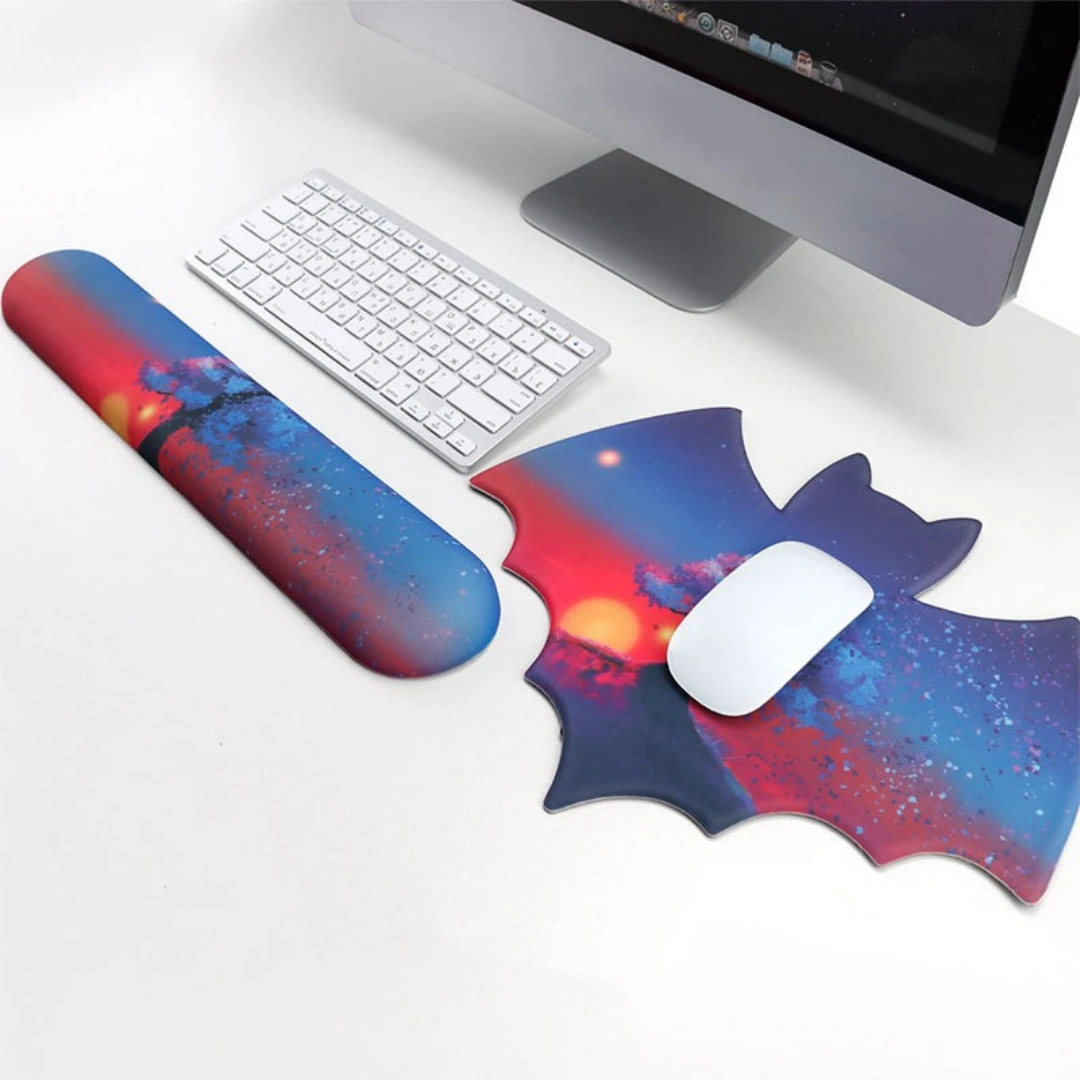
Introduction: mouse pads are small, but they are typical of global products
With the high popularity of computers and smart devices, mouse pads have become one of the most common computer peripheral products in the world. From the perspective of function, it is used to improve the positioning accuracy of the mouse and reduce the friction of the desktop. From the perspective of business, it is a mature consumer product and enterprise publicity carrier with high frequency use, low threshold, easy customization and strong exposure.
However, just because the mouse pad appears to be“Standardized,” it doesn’t mean it isn’t, when entering the international market, many enterprises tend to ignore the huge differences in size choice, material preference, design aesthetics, functional requirements and price acceptance among consumers in different countries and regions, this leads to fuzzy product positioning, imbalance of inventory structure, and even marketing failure.
In fact, the mouse pad is a highly“Scene-driven” products, different countries of the office, desktop environment, cultural aesthetics and use habits, will directly affect consumer choice. Therefore, it is of great practical significance for foreign trade factories, cross-border sellers and brands to systematically study the preference differences of mouse pads in different countries.
Second, the core factors affecting the preference of mouse pads in different countries are analyzed
Before in-depth analysis of the national market, we must first make clear: mouse pad preference is not accidental, but by multiple factors determined by the results.
1. Differences between office mode and usage scenario
Traditional Central Office vs. Home Office
Business office vs. Entertainment and e-sports
Fixed vs. mobile (laptop users)
For example, consumers in countries with a high proportion of home-based offices are more likely to invest in the aesthetics and comfort of their desks, while those in countries where traditional offices are dominant are more concerned with practicality and cleanliness.
2. Desktop space and living environment
Desktop size
Whether to use a table lift
Percentage of apartments occupied
The greater the desktop space, the greater the acceptance of large-sized or doily-type mouse mats.
3. Consumer culture and aesthetic orientation
Minimalism vs. personal expression
Business seriousness vs. Entertainment
Whether to accept exaggerated patterns or bright colors
4. Price sensitivity and brand awareness
Whether to pay more attention to value for money
Are you willing to pay a premium for a brand, design or IP
Psychological acceptance of ‘low-priced products’
Deep analysis of mouse pad preference in North American market (USA and Canada)
1. Overall market characteristics
North is one of the world’s largest consumer markets for computer peripherals, with the following characteristics:
A high percentage of people work from home
Esports and PC games have a large user base
Consumers pursue individuation and freedom
2. Size preference: large size and oversized doilies dominate
North n consumers have a significantly higher acceptance of mouse pad size than other regions:
Demand for standard mouse pads exists, but growth is limited
* * Extended Mouse Pad * * is the main growth category
Core Reason:
Desktop space is generally large
Gameplay requires extensive movement
The need for a unified desktop style is strong
3. Material and thickness preferences
Surface: high-density fabric, fine-grained cloth surface
Bottom: natural rubber, good skid resistance
Thickness: 3mm -5mm most popular
Thickness not only affects the hand feel, but is also seen as an intuitive manifestation of“Quality”.
4. Design and functional trends
Simple solid colors, geometric shapes
Techie, esports
Support for custom text and graphics
North n consumers have embraced“Personalization,” including photo customization, brand customization, and commemorative designs.
Iv. European market: equal emphasis on rational consumption and design aesthetics
1. The overall consumption logic of the European market
European consumers are generally more rational in their purchasing decisions:
Quality
Service life
Environmental Protection and compliance
European consumers spend less on impulse buys than their North n counterparts.
Size and shape preferences
Medium-sized mouse pads are the norm
There is demand for oversized doilies, but not just that
Focus on a clean desk
3. Materials and environmental requirements
Sensitive to smell
Prefer eco-friendly rubber, non-toxic materials
High attention to REACH, ROHS and other standards
Environmental attributes are not only a plus, but also a“Barrier to entry” in some European countries.
4. Design
Scandinavian minimalism
Low-saturation colors (gray, off-white, dark blue)
Sense of business and rational aesthetics
The acceptance of entertainment and exaggerated design in Europe is significantly lower than that in Asia and North .
Japanese market: exquisite, small and high standards coexist
1. The desktop environment determines the shape of the product
Japanese cities have limited living space and generally small desks:
Small, standard-sized mouse pads dominate
Demand for oversized mats is extremely low
2. Functional priorities
Precision
Slip resistance
Easy to clean and durable
Japanese consumers demand a high level of“Basic functionality”.
3. Design and culture
The second dimension culture has far-reaching influence
Animation, games, IP joint products have a high acceptance
Pay attention to packaging design and details
4. Consumer Psychology
Don’t go for the cheap
More willing to pay for quality and design
High regard for brand credibility
South Korea Market: Mouse pad demand under the dominance of e-sports culture
1. Esports-driven markets
South Korea has a mature e-sports industry:
Professional teams are influential
Consumers are sensitive to performance parameters
2. Product preferences
Medium to large size
High control or high speed surface optional
Moderate thickness
3. Design
Trendy and young
High demand for brand visual identity
Likes Limited Edition and co-branded
China market: multi-level, strong customization, high flexibility
1. Highly stratified market structure
China’s mouse pad market is remarkably diversified:
Ultra-low price and high volume
Customized corporate advertising
Esports and the high-end brand
2. Customization and advertising
Mouse pads are widely used in China:
Corporate gifts
Trade show gifts
Branding
The acceptance of LOGO printing, special-shaped custom, mass production is extremely high.
3. The space for innovation and experimentation
Special-shaped mouse pad
Creative patterns
Combination of functional products
Emerging Markets (Southeast Asia, South , Middle East, Africa)
The state of the markets
Computer penetration is still on the rise
High price sensitivity
Brand loyalty has not yet been fully formed
2. Product preference characteristics
Standard size
Base fabric
Non-slip and durable are preferred
3. Market opportunity
Mid-to low-end products
With the gradual upgrading of economic development
Local packaging and distribution are particularly important
Ix. The practical significance of different national preferences to product planning
1. Product line differentiation layout
| Markets | Core direction |
| North | Large size, esports, customisation |
| Europe | Environmental protection, simplicity and business |
| Japan | Small size, high quality, IP |
| South Korea | E-sports performance, trend design |
| China | Multi-tiered, highly customized, highly flexible |
| Emerging markets | Value for money, durability |
2. Inventory and supply chain management
Avoid“One size fits all”
Split the SKU according to the market
Improving turnover efficiency
3. Marketing and packaging localization
Localization of usage scenarios
Match between language and culture
Highlight local concerns (environmental, performance or price)
Conclusion: read the difference to win the global market
Mouse Pad, as a seemingly simple but highly scenario-based product, reflects the lifestyle, cultural aesthetics and consumption logic of consumers in different countries.
In the context of increasingly fierce competition in the global market, the mouse pad industry has already entered the“Fine operation” stage. Only by truly understanding the preferences of different national markets can we be accurate and effective in product design, pricing strategy, brand positioning and marketing promotion.
It’s not that the product isn’t good enough, it’s that it’s not in the right market, it’s not that the price isn’t competitive, it’s that it doesn’t meet real demand.
In the future, in the global market for sustainable development of the mouse pad brand, must be those who understand the difference, attention to detail, good localization of the enterprise.