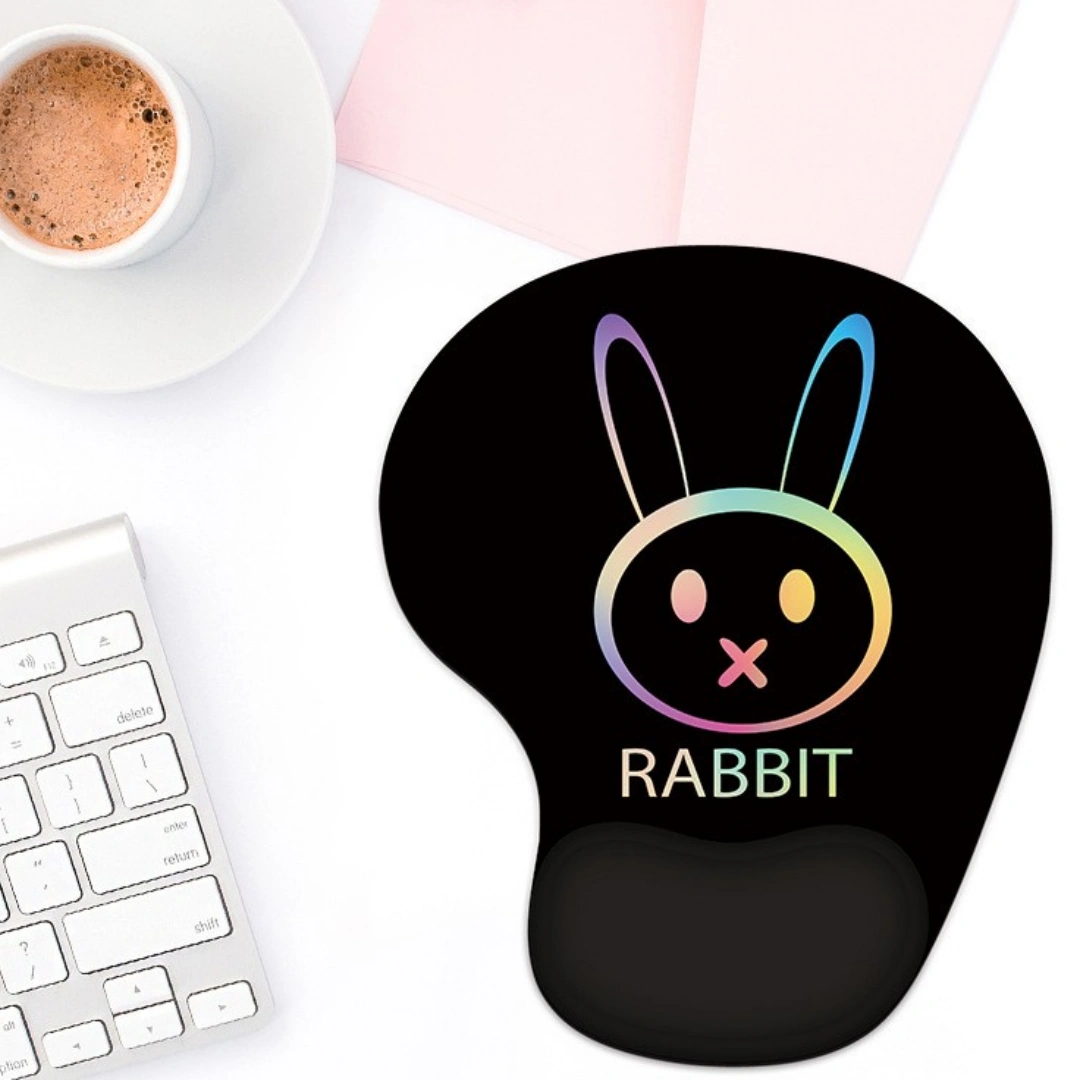
With the rapid development of office equipment and personalized gift market, custom mouse pads are more and more popular among enterprises, brands and individual users. Custom mouse pad can not only as promotional gifts, but also show the brand image and personalized design. However, in the process of customization, color is always the most concerned by customers. Especially for enterprise customers, whether the standard color of the brand is consistent with the color of the actual product is directly related to the unity and professionalism of the brand image.
This article will be customized mouse pad color causes, control methods, and can support Pantone spot color for a comprehensive analysis. In this paper, the concept of color difference, material and technology, color management process, Pantone spot color application, practical cases and customer operation suggestions are explained in detail.
Definition and importance of chromatic aberration
1. What is color difference?
A chromatic aberration is a perceptible difference between the color of a design and the color of the finished product. Color difference is not a simple“Error”, but an inevitable phenomenon caused by physical and technological factors. Color difference is mainly reflected in three aspects:
Difference between light and dark: the brightness of the color is darker or lighter
Saturation difference: the brightness of the color is high or low
Partial color phenomenon: color is red, blue, green or gray
In the process of customizing the mouse pad, even if the design document, process and equipment are correctly operated, there may still be a slight color difference, which is common in the industry.
2. Why are mouse pads particularly sensitive to chromatic aberration?
The special materials and use cases of the mouse pad make it more color-sensitive than printed paper:
Material Diversity: cloth, Pu, silicone, rubber and other materials on the color of the absorption capacity and different effects
Printing process is complex: common heat transfer, digital inkjet, screen printing and other processes on the color reduction ability is different
Special Use: brand gifts, corporate customization, advertising and other needs of color and brand standards are highly consistent
Therefore, color reduction and color difference control have become one of the most critical links in customizing mouse pads.
The main causes of custom-made mouse pad color difference
1. The difference between the display and the real thing
During the design phase, designers typically view colors on the screen, using the RGB (red, green, Blue-RRB- mode, printed or custom mouse pads use CMYK (cyan, magenta, yellow, black) models, which are fundamentally different:
RGB mode: the screen glows with a mixture of three primary colors
CMYK mode: physical ink-absorbing reflective display that produces color by covering the material with ink
As a result, even if the colors appear correctly in the design, the actual colors printed may still be darker or lighter. In addition, different brands and models of display brightness, contrast and color calibration, can also cause customers to see the color and the actual difference.
2. The influence of materials on color
The material of the mouse pad directly affects the final appearance of the color. Different materials have differences in ink absorption, surface texture, background color and so on:
| Material type | Characteristics of color performance | Suitable for printing process |
| Fine linen | Soft colors with good gradients | Thermal transfer, digital inkjet |
| Coarse grain cloth face | Slightly lower color saturation and more texture | Thermal transfer, digital inkjet |
| Pu/leather | Deep color and high texture | Screen Printing and hot embossing |
| Silicone | Solid color, but limited gradient | Heat transfer, screen printing |
Case study: the same red Logo appears bright and soft on the mouse pad with fine grain cloth, but it is dark on the mouse pad with Pu material, which is a normal phenomenon caused by the material itself.
3. The influence of printing technology on color
Different printing process to color reduction ability is different, is the mouse pad color difference is another major factor:
(1) thermal transfer printing
Principle: the pattern will be printed to the transfer paper, and then through high temperature and high pressure transfer to the mouse pad surface
Advantages: rich color, suitable for gradient images
Disadvantages: color by material ink absorption, monochrome Logo spot color reduction degree is limited
(2) digital inkjet printing (direct printing)
How it works: the image is sprayed directly onto the surface of the mouse pad
Advantages: gradient, complex patterns restore ability
Cons: slightly worse monochrome spot color control, especially Pantone spot color
(3) screen printing
How it works: patterns are printed through screens and inks
Advantages: suitable for monochrome or less Logo, Pantone spot color reduction degree is high
Disadvantages: not suitable for gradients, complex patterns
4. Batch differences and environmental factors
During mouse pad production, batch and environmental conditions also affect color:
Raw material batch differences: there may be small differences in the color of fabric or PU leather
Ink batch differences: different batches of ink color, saturation is slightly different
Production environment: temperature, humidity will affect the transfer printing effect
Professional manufacturers will control these factors through standardized processes to keep the color difference within acceptable limits.
Pantone spot color and its application in the customization of mouse pad
1. What is Pantone Spot Color?
Pantone (Pantone) is a set of international color standard system, each color has a fixed number. Pantone spot colors are widely used in brand design, packaging, printing, and advertising. The advantages include:
Color standardization, cross-regional and factory uniformity
High brand recognition ensures a consistent corporate image
Can be used for monochrome Logo, less accurate reduction of color patterns
2. Does the custom mouse pad support Pantone spot colors?
Conclusion: Yes, but limited by process and material.
(1) screen printing process
Best for Pantone spot colors
The Logo can be accurately reproduced with spot-color ink
Suitable for monochrome or less color patterns, gradient effect is limited
(2) thermal transfer/digital inkjet process
Simulated Pantone color number
It can restore the gradient pattern, but the color is slightly different from the standard Pantone
Suitable for gradient and multi-color images, but can not guarantee the exact same
(3) texture effects
The ink absorption rate of fabric material is high, and the color may be slightly lighter
The surface of Pu/silica gel is smooth and the color is dark
Color consistency should be confirmed by proofing
3. Industry practice: Pantone proofing process
To ensure color accuracy, the following procedures are commonly used in the industry:
Customers provide Pantone color numbers
Manufacturers to deploy the ink or color simulation
Making physical proofing
Mass production after customer confirmation
Proofing is a key step to solve color disputes and ensure brand color consistency.
How to avoid or reduce chromatic aberration to the greatest extent?
1. Define your color requirements
Before placing an order, customers should be clear:
Is it the brand standard color
Whether to specify a Pantone number
Is slight chromatic aberration allowed
Explicit requirements help manufacturers choose the right material and printing process.
Forced proofing
Proofing is the most effective way to reduce the risk of chromatic aberration:
Small batch or gift mouse pad: slight color difference can be accepted, can choose to simulate color
Brand or bulk orders: must be proofed to confirm color consistency
Proofing can verify the material, printing process and color effect at the same time
3. Choose experienced manufacturers
Experienced manufacturers usually have:
Perfect color management process
Stable supply chain and raw materials
A clear specification of chromatic aberration standards
Choosing an experienced manufacturer is a better way to ensure color consistency than simply looking for a lower price.
4. Rational view of“Color difference range”
In the industry, there is a common expression:
“Subject to material object, slight color difference is allowed”
This is a professional statement of physical and technological limitations, not a matter of quality. Customers should set reasonable tolerances for chromatic aberration based on practical use and requirements.
5. Material and process matching suggestions
| Type of use | Suggested materials | Recommended craftsmanship | Pantone support |
| Monochrome Logo corporate gifts | PU/muslin | Screen printing | High precision support |
| Color gradient ad mouse pad | Fine lines on fabric | Thermal transfer/digital printing | Can simulate Pantone |
| High-end business gifts | Pu/leather | Hot Press or screen printing | Monochrome Logo with high precision support |
Case study
Case Study # 1: mass customization of corporate Logo mouse pads
Material: fine grain cloth surface
Process: thermal transfer
Color: Pantone 186C (brand Red)
Problem: the first version of the proofing color is too light
Solution: by adjusting the ink concentration, improve the transfer temperature, and confirm the proofing, the final mass production color
Case 2: Gradient Advertising Mouse Pad
Texture: Denim
Process: Digital Inkjet
Color requirements: multi-color gradient, no specified Pantone
Problem: the colors vary slightly from batch to batch
Solution: Unified Batch production, adjust the printer color configuration, control the color difference in an acceptable range
Vi. Summary and recommendations
1. Core conclusions
Color difference may appear, but controllable: through the material selection, process matching, proofing confirmation, can be controlled in an acceptable range
Pantone spot color support is limited: screen printing can be accurately restored, thermal transfer/digital inkjet can be simulated close
Proofing is the key: for brand color, Logo and other color-sensitive projects, proofing is essential
Selection of experience manufacturers: process specification, equipment stability, raw materials consistent, to ensure the effect of color reduction
2. Customer operation suggestions
Clear color standard and color difference tolerance in advance
Monochrome Logo/brand colors should be printed on screen whenever possible
Gradient or complex patterns can be printed using thermal transfer or digital inkjet
Be sure to check the proofs before mass production
Work with experienced manufacturers to make sure the colors match the materials
Through the above measures, the color performance of the custom mouse pad can achieve visual consistency and highly unified brand image, which not only meets the aesthetic, but also takes into account the practicability and professionalism.