First, the change of cross-border e-commerce environment: from“Selling thinking” to“Product and brand thinking”
In the past few years, cross-border e-commerce has undergone significant changes:
Early stages: information asymmetry, you can sell anything
Medium-term stage: supply chain dividends, spell price, spell on the new speed
Current stage: highly transparent, fight products, fight brand, fight fine operation
On major platforms like Amazon, Shopee, Lazada, and TikTok Shop, consumers can compare dozens of nearly identical products in seconds. This leads to three results:
As prices continue to fall, profit margins are squeezed
Advertising costs continue to rise and Rois to fall
Unbranded products are getting harder to trust
In such an environment, cross-border sellers must answer a central question:
Why aren’t the products I’m selling“Substitutable”?
Customization is an important step from“Selling” to“Making products”.
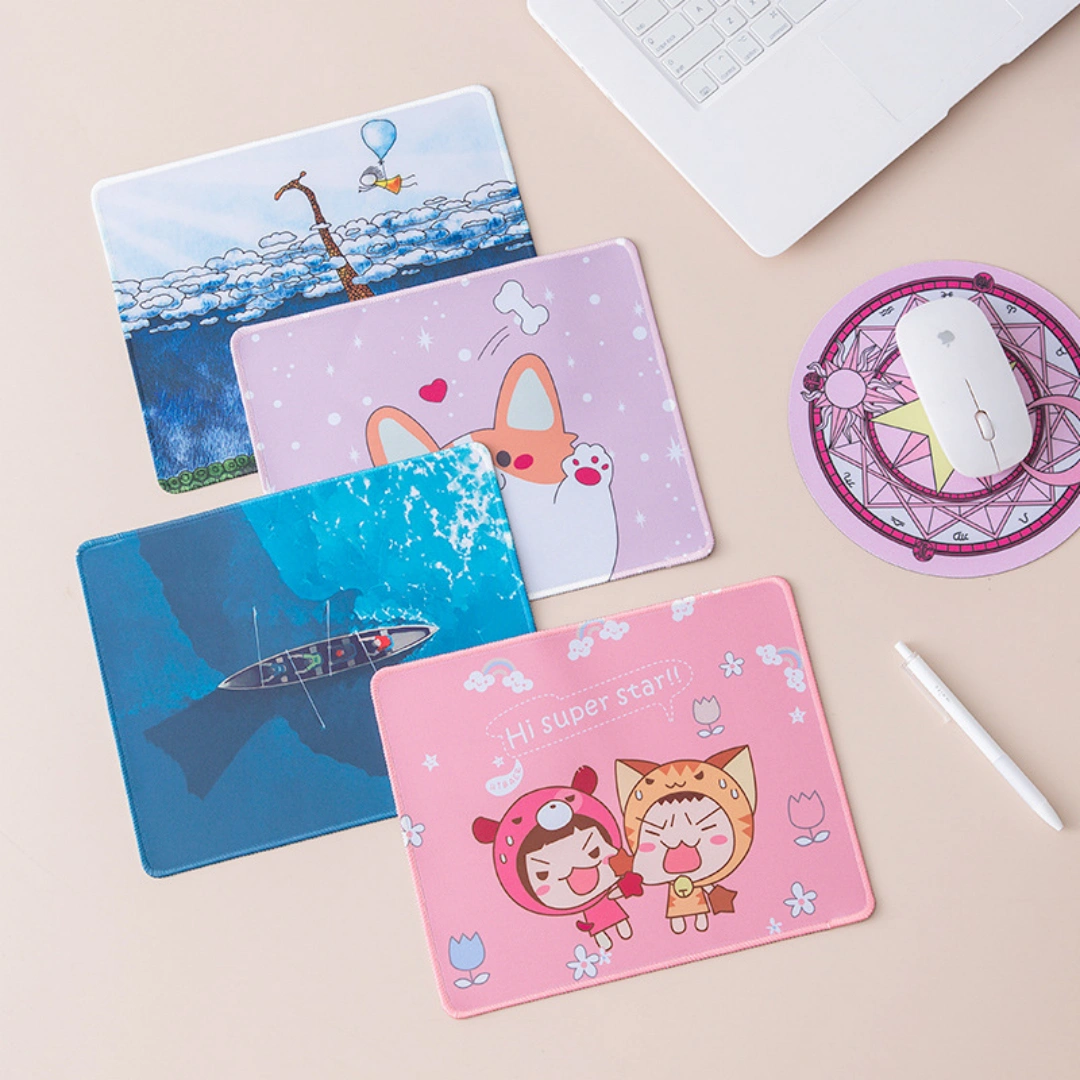
Why are mouse pads the“Preferred option” in the cross-border customization category?
1. Mouse pads are“High frequency, rigid, low decision cost” products
From the consumer’s point of view, mouse pads have several key features:
High frequency of use (hours per day)
Long Life (1-3 years or more)
Low decision threshold (does not require complex parameter understanding)
Emotions and aesthetics matter (look and feel are important)
That means consumers are more likely to pay for a“Good-looking, easy-to-use, personalized” mouse pad than for a rock-bottom price.
2. The simple structure of the mouse pad makes it ideal for customization
From the product structure, the mouse pad essentially consists of three parts:
Surface materials (cloth, leather, composites, etc.)
Intermediate (cushion, support)
Bottom non-slip layer (rubber, Pu, silicone, etc.)
This structure determines:
Quality risk is relatively controllable
The repair rate is low
Does not involve complex electronic or security certification
For cross-border sellers, this is a customised product with“Very low trial and error costs”.
3. China’s supply chain is highly sophisticated in the area of mouse pad customization
China’s advantage in the mouse pad industry is clear:
The supply of raw materials is stable
Mature printing process (thermal transfer printing, silk screen printing, digital direct injection)
Mold and profile cutting ability
Strong ability of cost control
This allows cross-border sellers to diversify their customisation programmes at relatively low cost, something many overseas suppliers are unable to do.
Third, the mouse pad customization of cross-border sellers in-depth analysis of the core advantages
Advantage one: break homogeneity, establish real product differences
On cross-border platforms, standard mouse pads tend to have the following problems:
High similarity in appearance
Similar functional descriptions
Consumers can only use“Price” to make choices
Custom mouse pads
Differences can be built on multiple dimensions:
1) differentiation at the visual level
Original illustrations
Specific cultural elements (region, festival, language)
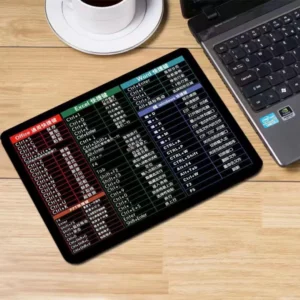
Design for specific demographic groups (programmers, esports players, students)
The visual difference is the value that the consumer can perceive at first sight.
2) size difference
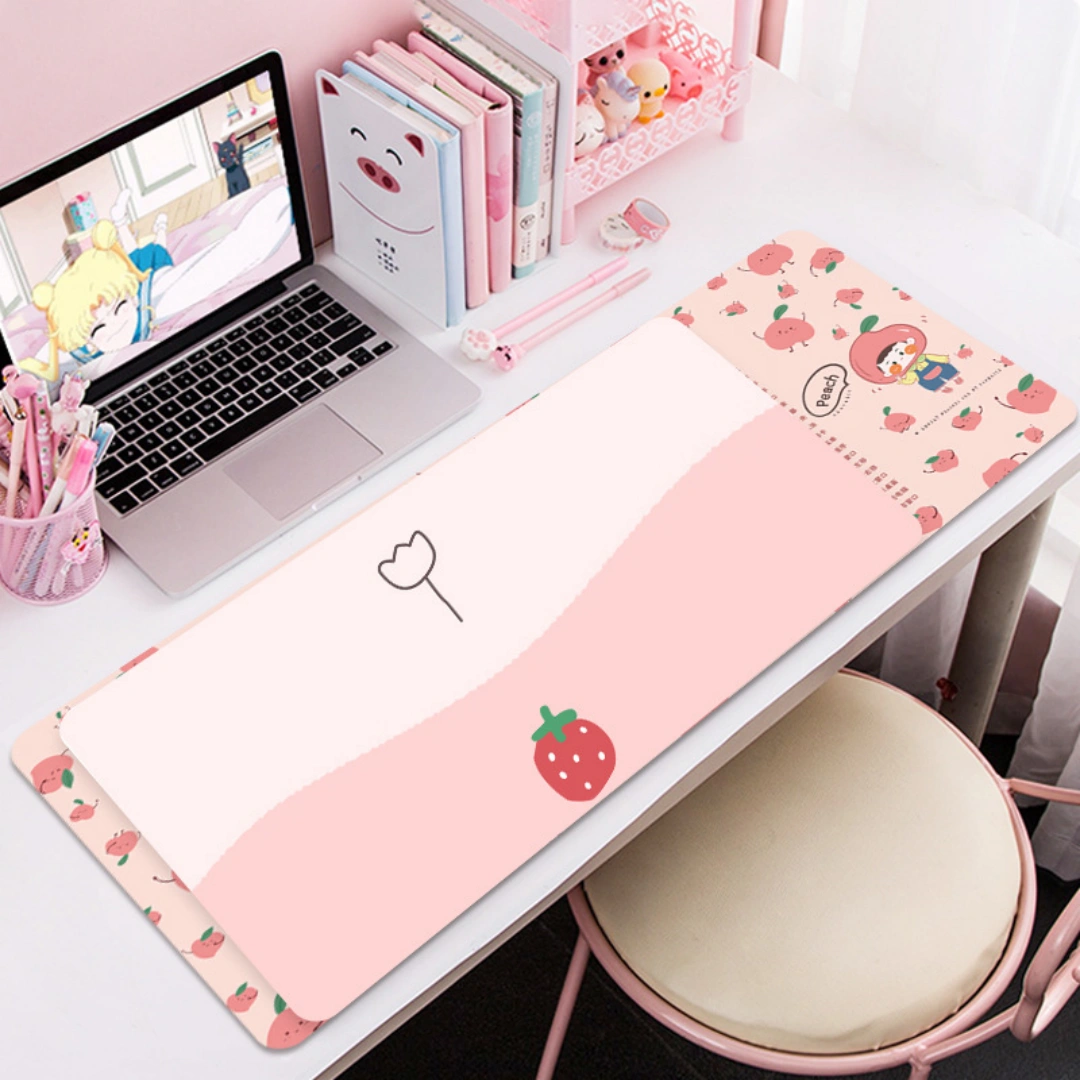
Oversized table mats (keyboard + mouse)
Extra-long office mat
Portable and foldable
These specifications are often not met by standard products.
3) differences in user experience
Thicker primer
Finer or smoother surface textures
Waterproof, stain resistant, easy to clean design
When the difference is large enough, price sensitivity naturally declines.
Advantage 2: creating higher and more stable profit margins for cross-border sellers
The profit advantage of custom-made mouse pads can be seen in three aspects:
1) design premium
Consumers are no longer buying“Just a mouse pad”, but:
A style
An attitude
An identity
Design itself has a premium.
2) feature premium
When you emphasize:
More comfortable
More durable
More suitable for a particular situation
Consumers are more willing to accept higher prices.
3) portfolio and set sales
Custom mouse pads can:
With a keyboard pad
With desk accessories
As part of the gift set
Effectively improve the overall passenger unit price.
Advantage 3: natural for building brands, not one-off deals
The Mouse Pad is one of the very few products that can“Hold a user’s attention for a long time”:
On your desk
On the game table
Use It repeatedly every day
When a Logo, slogan, or unique design appears on a mouse pad, it’s equivalent to:
A long-standing“AD space”
A medium that continually reinforces brand awareness
This is extremely valuable for cross-border sellers to own their brands.
Advantage Four: minimum order quantity and controllable risk, suitable for small and medium-sized sellers to test the market
Compared to clothing, shoes and other customized products, the advantages of the Mouse Pad is also:
The minimum order size is relatively friendly
Short product development cycle
No serious sizing or fit problems
Cross-border sellers can:
Small-batch test design
Rapid validation of market feedback
The successful model is then mass-produced
This is very much in line with the current cross-border sellers“Light inventory, fast iteration” operation.
Strength 5: highly adaptable to multiple cross-border business models
1. Amazon/Shopee
Build Listing differentiation through design and functionality
Reduce reliance on price wars and advertising
Stand-alone DTC model
Mouse pad is a very good“Brand entry level product”
Great for storytelling and content marketing
3. Business customization and B2B orders
Corporate gifts
Employee benefits
Marketing materials
High single order amount and strong repurchase potential.
The POD model
Reducing inventory risk
Design trends for rapid testing
Suitable for creators and small teams
Typical application scenarios of mouse pad customization in cross-border market
Scenario 1: Private label cross-border sellers
Through the unified design language and product style, gradually build brand equity.
Scenario 2: The Gift and promotion market
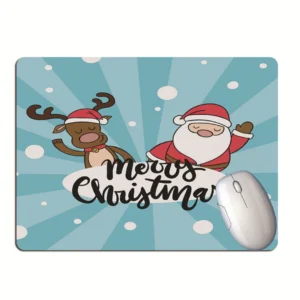
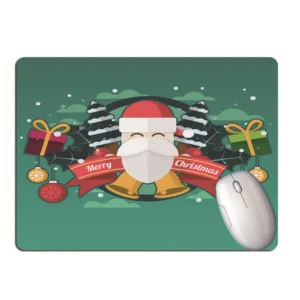
Christmas
Black Friday
New Year
Company anniversary celebration
The mouse pad is a highly practical gift that isn’t easily thrown away.
Scenario 3: vertical market segments
Esports players
Programmer
Designer
Student body
The more vertical the customized content, the more sticky the user.
Five, cross-border sellers do custom mouse pad must pay attention to the key details
1. Design is not“Printing”, but product design for the market
There are clear differences in the aesthetics of different national markets:
Europe and the United States: minimalist, function-oriented
Japan: detail, restraint
Southeast Asia: rich in color and price sensitive
Design must be based on target markets, not preferences.
2. Material and process directly determine the repurchase rate and the rate of negative reviews
Common risks include:
Chromatic aberration
Smell
Chipped primer
Raised edges
Selecting a stable, experienced supplier is critical.
3. Logistics and packaging can’t be ignored
Oversized → freight surge
Improper packaging → easy creases, complaints
The logistics cost of customized products must be considered from the product design stage.
4. Compliance and copyright awareness must be established in advance
Don’t use infringing IP
Do not use unauthorized patterns
Do Not Touch Platform Red Lines
This is the bottom line for long-term cross-border operations.
Conclusion: custom-made mouse pad is an important tool for sustainable growth of cross-border sellers
Taken together, the mouse pad custom with:
Low threshold
High flexibility
Strong differentiation
High brand carrying capacity
Today, cross-border e-commerce is gradually returning to rationality and long-termism. Mouse pad customization is not a“Speculative product”, but a product line that can be cultivated for a long time.
For cross-border sellers who want to get rid of price wars, build brands and improve the quality of their profits, mouse pad customization deserves to be taken seriously and system layout.