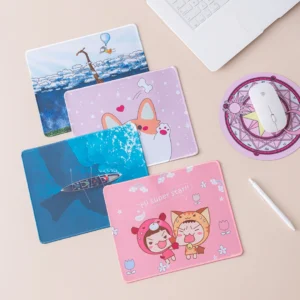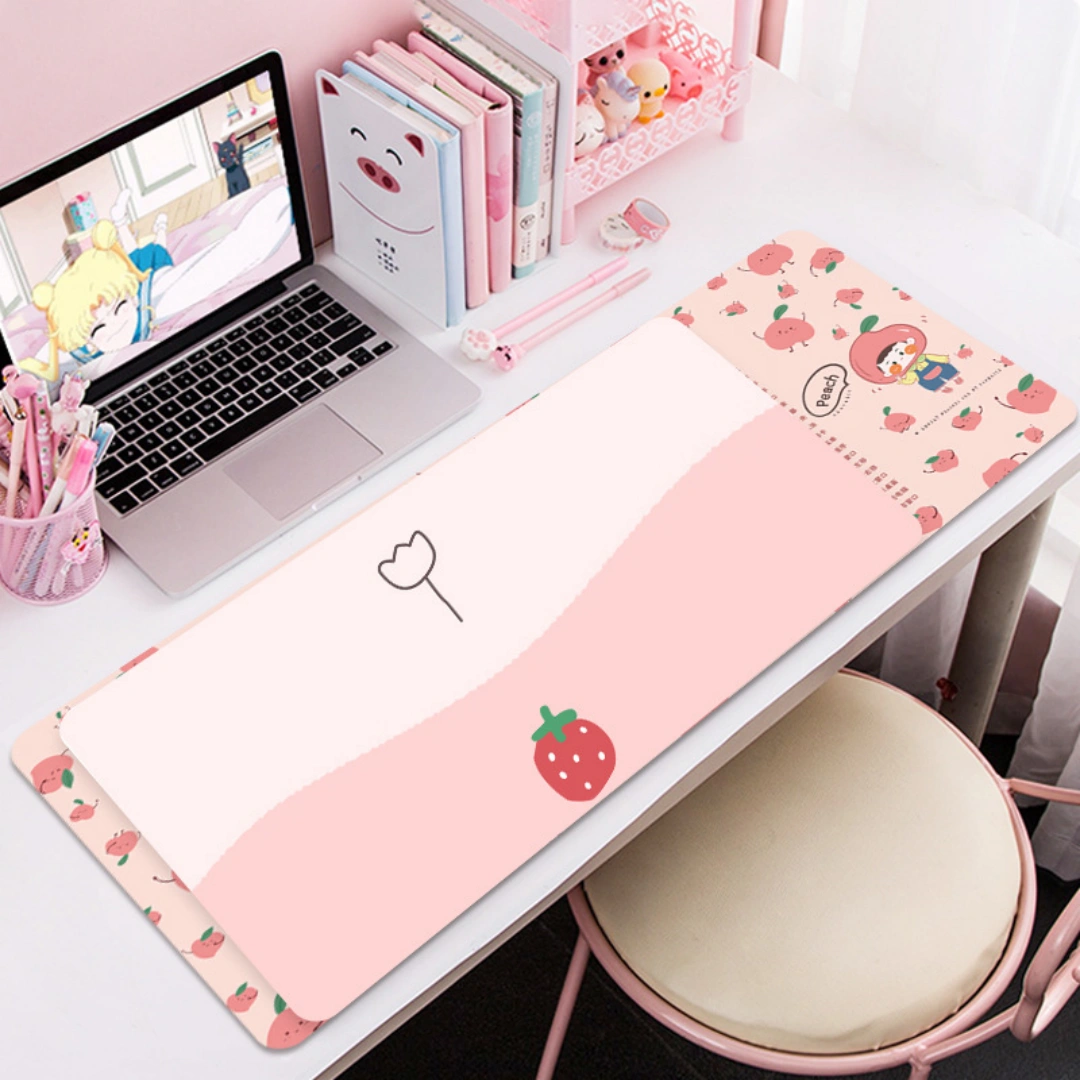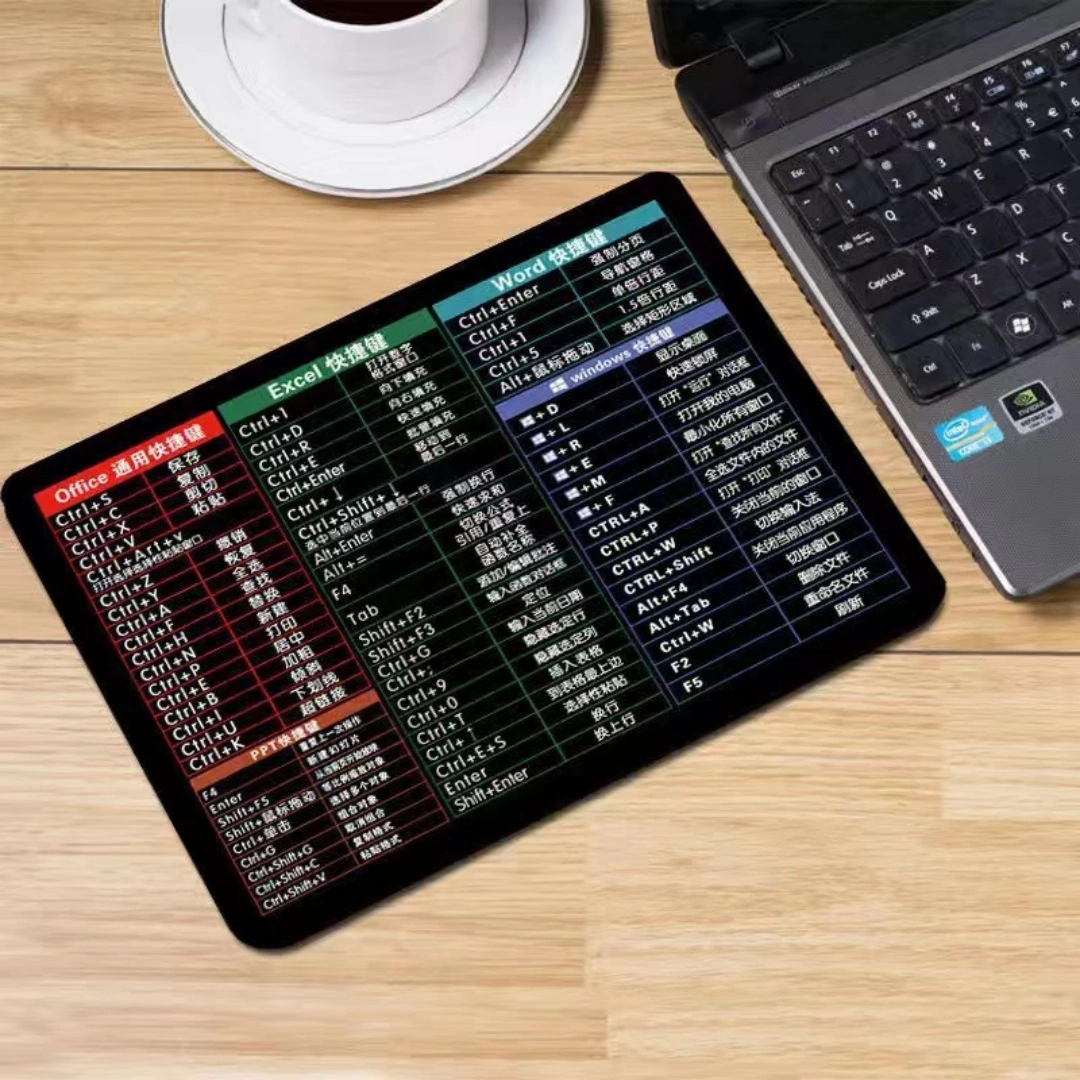
With the rapid development of information and Digitization, mouse pad as an important part of computer peripheral products, its market demand continues to grow. From office users to e-sports players, from custom gifts to corporate procurement, the mouse pad application scenarios are very wide. For Enterprises, how to plan the mouse pad product line, not only to meet the diversified needs, but also to avoid product homogeneity, inventory backlog and waste of resources, is an important issue in corporate strategic decision-making.
This paper will analyze the planning method of mouse pad product line in detail from the perspectives of market analysis, product classification, positioning strategy, design and production, sales and promotion, and provide operational suggestions and practical cases, to help enterprises to establish a scientific product line system to achieve brand differentiation and market competitiveness.
Market Analysis: the starting point of product planning
Scientific product line planning must be market-oriented. Only by understanding the needs of users, market trends and competitive situation, to develop a reasonable product strategy.
1. User Group analysis
Mouse pad users are mainly divided into the following four core groups, and their demand characteristics and scenarios are significantly different:
| Type of user | Core features | Core requirements | Typical scenario |
| Office users | Pay attention to comfort, durability, basic beauty; stable operating frequency, long use time | Non-slip, wear-resistant, feel comfortable, moderate size | Corporate Office, Home Office desktop |
| Esports players | Seek high precision, fast response, smooth operation; love personalized appearance | High precision surface, low friction/adjustable friction, padded body, RGB lighting, super size | Professional esports, Gamer desktops |
| Enterprise/gift market | Focus on branding, custom printing, and cost control | Custom LOGO/LOGO/corporate color, flexible size and shape, controllable bulk purchase price | Enterprise Annual Meeting Gifts, conference gifts, exhibition promotional materials |
| Potential new customers | High acceptance and innovative features | Additional features such as wireless charging, antibacterial surfaces, and smart sensing | Smart office scene, high-end home desktop |
Analysis of market trends
There are four core trends in the mouse pad market in recent years that provide direction for product line planning:
Function segmentation: from the basic office supplies to the extension of the scene of the function (such as e-sports special thickening, office wireless charging) , differentiated features become a market segment breakthrough.
Personalization and customization: users’ demand for patterns, sizes, and shapes is surging. Enterprise customized models not only meet personalized needs, but also achieve brand exposure.
High-quality and environmentally friendly materials: natural rubber, recycled materials, antibacterial treatment has become the mainstream, not only enhance the user experience, but also in line with environmental consumption trends, strengthen the brand image.
Cross-border integration and intelligence: the integration of wireless charging, smart lighting, health wrist support and other functions, to upgrade to smart office products, enhance product premium capacity.
Through in-depth market analysis, enterprises can accurately target users, clear main direction, lay a scientific foundation for product line planning.
Product classification: establish a clear product matrix
Product classification is the core of product line planning. It is necessary to construct the product matrix of the system from multiple dimensions to avoid homogeneous competition.
1. By material (core classification dimension)
| Material type | Core features | Applicable population | Core Strengths |
| Cloth Mouse Pad | Comfortable to handle, smooth to operate, low cost | Office users, gift market | Easy to print, high degree of color reduction, adapt to corporate LOGO customization |
| Hard Mouse Pad (plastic/aluminum) | Precise operation, low surface friction and wear resistance | Esports players, professional users | Adapt to high-speed mouse operation, improve game/professional work efficiency |
| Silicone/TPU mouse pad | Soft, durable and non-slip | Office users, gift market | It is comfortable to handle and has desktop protection function |
| Eco-friendly mouse pad (natural rubber/recycled material) | Environmental protection, biodegradable, comfortable and durable | Eco-friendly corporate customers and high-end customers | In line with the trend of sustainable development, to create high-end products selling points |
2. By use (by scenario)
Office: Comfortable and durable, moderate cost, simple appearance → Adapt to enterprise office, Home Office scene
Game-type: large size, adjustable friction coefficient, RGB lighting, thickness optional → Adapt to esports games, professional players desktop
Business/gift type: beautiful appearance, customizable LOGO, flexible size → fit corporate gifts, conference gifts, exhibition promotional materials
3. By function (value hierarchy)
Basic: for General Office/home use at affordable prices
Additional features: equipped with wireless charging, wrist support, LED lighting, antibacterial coating, etc. (value-added)
Smart: integration of Bluetooth, sensors, health monitoring functions, can interact with the device (high-end)
4. By size and shape (fit category)
Standard size: fits regular office/home desktops
Super Size: covers the keyboard and mouse area and is suitable for esports/professional desktops
Special-shaped/custom size: designed for corporate LOGO/event needs, suitable for gift/promotional scenes
Through multi-dimensional classification, enterprises can form a three-dimensional product matrix of“Material + use + function + size”, and clarify the differentiated positioning of each series.
III. Product positioning: clear market direction
Different product lines need to have clear positioning, avoid internal competition, and achieve optimal allocation of resources.
1. High-end collection
Target audience: Professional e-sports Players, high-end office users
Product features: high-quality materials (natural rubber, aluminum alloy) , rich additional features (wireless charging, RGB lighting) , beautifully designed, high prices
Market strategy: brand image and high-end experience as the core selling point, layout of e-sports channels, e-commerce flagship stores, high-end office supplies channels
2. Mid-range series
Target users: ordinary office users, home users, entry-level game enthusiasts
Product features: cost-effective outstanding, both comfort and durability, to meet basic needs
Market strategy: comprehensive coverage of e-commerce platform, offline retail channels, to undertake bulk purchase orders, to create the main sales
3. Custom/gift collection
Target audience: corporate clients, event gift buyers
Product features: support LOGO/pattern customization, flexible size and shape, cost control
Marketing strategy: Focus on B2B sales, corporate cooperation, exhibition marketing, brand exposure value to attract customers
Product Design and production: From concept to implementation
Product Design and production directly determine the quality and user experience, and a closed-loop system of“Design-supply chain-quality control” needs to be formed.
1. Design strategy
(1) visual design
Office: Minimalist, calm (black/grey/light blue)
Game: cool design, bright colors (fluorescent/gradient) , personalized graphics
GIFT type: highlight the brand LOGO, into the corporate culture elements, with simple packaging
(2) functional design
Thickness: Office 2-4mm, game 4-6mm, oversized 8mm
Friction coefficient: e-sports model low friction (suitable for high-speed operation) , office funds moderate friction (both smooth and control)
Non-slip bottom: made of silicone/rubber to enhance the fit of the desktop
(3) ergonomics
Wrist support: curved design to reduce long-term use of fatigue
Padded/memory cotton: improves tactile comfort for long office/gaming hours
2. Production strategy
(1) diversified supply chain management
Build supply chain according to material classification (fabric/hard/environmental protection materials respectively docking professional manufacturers)
Establish a backup supplier system to ensure a stable supply of raw materials
(2) quality management
The establishment of the whole process testing standards: surface smoothness, friction coefficient, wear resistance, printing clarity, environmental indicators
Implement sampling inspection system to avoid batch quality problems
(3) cost control
Mass production reduces unit costs, and mold reuse optimizes production efficiency
Pricing according to product positioning (premium 30%-50% for high-end models, 15%-20% for mid-range models, and mass-market pricing for customized models)
Marketing and promotion: maximizing product line value
Through the precise channel, differentiation promotion and combination strategy, to achieve sales and brand value double promotion.
1. Channel strategy
| Types of channels | Adaptation products | Core Strengths |
| E-commerce platform (Taobao/jd.com/pinduoduo) | Mid-range and high-end series | Covering the public users, traffic concentration, easy to break through sales |
| Enterprise customization channel (B2B platform/direct sales) | Customization/gift collection | Precision docking enterprise customers, large order batch, strong stability |
| Offline retail (digital store/office supply store) | Mid-range, office-style products | Support experiential sales, enhance user awareness |
| Esports channel (esports/game host collaboration) | High-end game series | Reach out to your core players and enhance your professional image |
2. branding
Differentiated publicity: highlight the core selling points (such as“Environmental protection materials”, “RGB intelligent lighting”, “Ergonomic design”) , the formation of brand memory
Customized marketing: show customized case (such as annual gifts, promotional materials exhibition) , to attract similar customers
Social media and Kol: team up with esports anchors and office gurus to conduct product reviews to reach your target audience
3. Product mix
Main series: to create 1-2 star products (such as high-end e-sports section, high cost-effective office funds) , establish the brand image
Auxiliary series: around the main product features/dimensions, to meet the diversified needs
Set sales: the introduction of“Mouse Pad + mouse + keyboard” office/game sets, to increase customer unit price
Case Studies: successful product line planning practices
1. esports brand case
A head e-sports brand to build“Office Series + professional game series + custom peripheral series” product line:
The game series is made of aluminum alloy/high-density surface material, equipped with RGB lighting and oversized design
Through the sponsorship of esports competitions, the cooperation of game anchors, and the promotion of esports communities, the professional image is strengthened
Results: the sales of game series accounted for 60% , and the brand premium ability increased by 40%
2. Corporate gift customization case
An office supply company focuses on the custom gift market:
Logo printing, color customization, special-shaped design and other one-stop services
Provide custom mouse pads for internet company annual meetings and large-scale exhibitions, with corporate packaging
Results: accumulated 500 + Enterprise customers, customized business growth rate of 35%
The case for cross-border innovation
A tech company launches a Smart Office Mouse Pad:
Integrated wireless charging, wrist health monitoring, and smart lighting alerts
Priced three times higher than normal, targeting the high-end office market
Results: through high-tech media reports and high-end office scene experience activities, it quickly opened the market and became the benchmark of industry innovation
Summary and suggestions for implementation
Mouse pad product line planning is a systematic project, which needs to run through the whole chain of“Market-product-production-marketing”. The core lies in“Taking user needs as the core, taking differentiation as the starting point, and taking quality as the guarantee”.
Core implementation suggestions:
Market-oriented: Through User Research, competitive analysis, trend prediction, clear product direction, avoid blind development
Matrix layout: according to the“Material + use + function + size” to build a product matrix, covering different user levels
Differential positioning: high-end section tree image, the middle-end section to go sales, custom extension section customers, to avoid internal competition
Design and quality: Focus on ergonomics, functional innovation and environmentally friendly materials to enhance user experience and brand reputation
Precision Marketing: channel adaptation products, promotion to hit the Pain Point, combination strategy to improve transformation
Continuous iterative optimization: establish market feedback mechanism, optimize product features and pricing based on sales data and user evaluation
Through scientific and systematic product line planning, enterprises can not only meet the needs of diversified users, but also optimize the allocation of resources, enhance brand value, and establish long-term competitiveness in a competitive market.