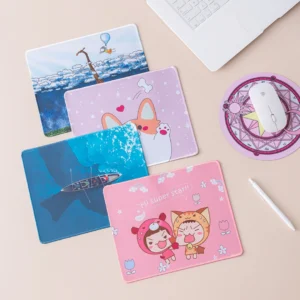
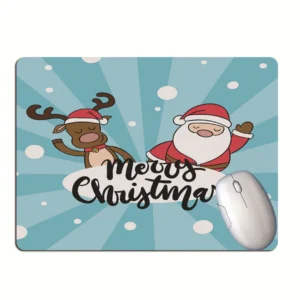
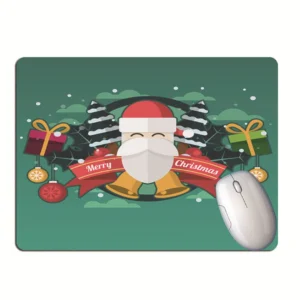
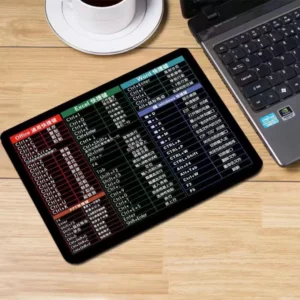
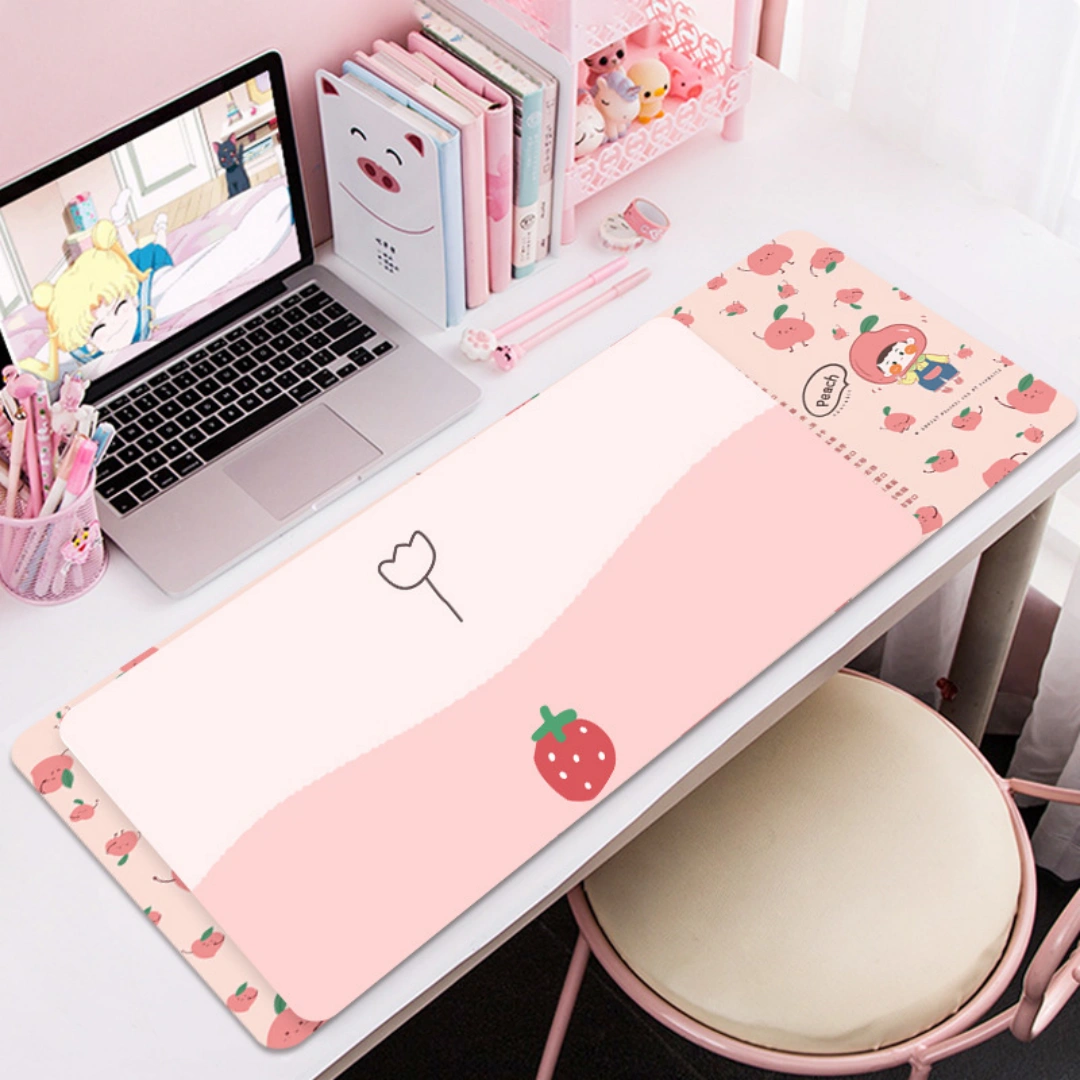
In the modern office, e-sports and promotional gift market, mouse pad customization has become an important means of brand publicity and personalized display. Whether it is corporate gift giving, exhibition promotion, or personal e-sports equipment upgrading, the printing effect of the mouse pad directly affects the beauty, grade and use experience of the product.
There are currently two main types of Printing on the market: Sublimation Printing and Screen Printing. Both of them have their own advantages and limitations in process principle, applicable materials, effect presentation and cost control. Faced with so many choices, corporate buyers and individuals often feel confused: which printing method should I choose? Which one better fits my budget, needs, and usage scenarios? In this paper, the advantages and disadvantages of thermal transfer printing and screen printing are compared in detail from the aspects of printing principle, applicable materials, printing effect, cost analysis, durability, maintenance methods and industry application cases, to help you make scientific decisions.
Overview of mouse pad printing methods
The choice of mouse pad printing process, not only determines the aesthetic effect of the product, but also affects the production cost and durability. Different printing methods are different in process principle, applicable materials, effect presentation, processing flow and so on.
1. Sublimation Printing
Thermal transfer printing, also known as sublimation printing, is a printing technology that uses high temperature to directly sublimate solid dyes into gas-permeable Huawei fibers. It is often used in polyester cloth or polyester coated mouse pad.
Process:
Design Patterns, use special software for color decomposition and typesetting;
Print the pattern on heat transfer paper using sublimation ink
Place the patterned paper in close contact with the surface of the mouse pad and place it in a hot press
Under High Temperature (about 180 °C ~ 200 °C) and pressure, the ink sublimation penetrates into the polyester fiber or coating, forming a permanent pattern;
The printing is completed after cooling.
Key features:
Bright colors, full-color gradient and photo-level subtle effects;
Ink penetrates the fiber, wear and wash, not easy to fall off;
Large area coverage, suitable for printing complex patterns and high precision logo;
High requirements for the material, polyester or special coating surface.
2. Screen Printing
Screen printing is a traditional printing technique that uses a screen plate to squeeze ink onto the surface of a mouse pad. Each color needs to be individually produced screen, multi-color printing to multiple operations, suitable for monochrome or a small number of color patterns.
Process:
According to the design production screen, each color a screen;
Place the screen on the surface of the mouse pad, using a scraper to evenly scrape the ink to the surface;
Multi-color printing requires layer-by-layer printing, drying or curing between each layer;
After printing is completed, drying or UV curing is performed to improve wear resistance.
Key features:
Thick ink layer, feel obvious, there is a certain sense of three-dimensional;
Mature technology, durability, suitable for long-term use;
Suitable for simple logos, geometric patterns and text;
Low cost for mass production, especially for monochrome printing
It is adaptable to almost any mouse pad material.
Comparison of printing effect
The core basis of selecting printing method is the pattern effect and visual expression. There are significant differences in precision, color, gradient and texture between different printing methods.
| Comparing items | Thermal transfer | Screen printing |
| Finesse of pattern | High, photo-level detail | Medium, good for simple graphics |
| Color | Rich and full, the gradient is natural and smooth | Monochrome/a few colors, gradients are difficult |
| Wear resistance | High, the ink penetrates the fiber, not easy to fall off fade | High, thick ink layer, but the edge is easy to wear |
| Feel the touch | Smooth and smooth, it blends in with the fabric | The ink layer is raised, tactile and three-dimensional |
| Transparent effect support | Semitransparent transitions can be achieved | Transparency effects are not supported |
| Suitable for pattern types | Color photos, gradient backgrounds, complex logos | Simple logos, text logos, geometric shapes |
Effect Analysis:
Thermal transfer: the core strengths are color fidelity and detail, making it ideal for high-impact scenarios such as esports mouse pads, high-end gift customization, or personalized photo printing, maximizes the depth and richness of the design.
Screen Printing: the core advantage lies in the stability and durability of the process, the raised feel of the ink layer is suitable for office scenes, and the low cost and high efficiency of monochrome printing are especially suitable for corporate LOGO publicity and promotional gifts, it can meet the durability requirements of high-frequency use scenarios.
III. Comparison of applicable materials
The adaptability of different printing methods to materials directly affects the quality of the final product. Reasonable matching of materials and printing methods is the key to ensure the effect and durability.
| Material type | Thermal transfer suitability | Screen printing suitability |
| Polyester fabric (including coating) | Perfect match, best color reproduction | Printable, slightly less saturated |
| Rubber base (pure rubber) | To be printed, a composite polyester coating is required | Direct printing, strong adhesion |
| Pu Leather/artificial leather | Not suitable, unable to achieve dye sublimation | Fit, printable monochrome LOGO |
| Cotton | No, the fiber can not absorb dyes | Suitable for simple text printing |
| Eva/composite | Can be printed after coating | Direct printing, strong compatibility |
Key Tips: the core of heat transfer printing depends on dye sublimation technology, which must act on the surface of permeable polyester fiber or special coating. Silk screen printing is achieved by ink physical adhesion, which is highly compatible with materials, can be used on almost any mouse pad substrate.
Cost Analysis
Cost is the core consideration in mass customization. Printing cost is affected by many factors, such as material, pattern complexity, order quantity and so on. The following are the cost characteristics of the two processes:
1. Cost structure of thermal transfer printing
Advantages: no screen production, low preparation cost, suitable for small batch, multi-style customization; pattern complexity does not affect the basic cost, high value-added product profit margin.
Disadvantages: high cost of single piece printing (including special ink, hot pressing energy consumption) , large area color printing costs further rise; large initial investment in hot press and other equipment.
Cost estimation (reference value) : small volume customization (100 pieces) , the cost per piece of about 8-15 dollars (including pattern design, material and heat transfer process) .
2. Screen printing cost structure
Advantages: low cost per piece for mass production, cheap ink consumables; mature process, high production efficiency, suitable for large-scale replication.
Disadvantages: multi-color printing needs to make the corresponding number of screen, the opening cost is high; the higher the complexity of the pattern, the more the number of color, the higher the cost.
Cost estimation (reference value) : mass customization (1000 pieces) , single cost about 2 ~ 5 dollars (including screen production, materials and screen printing process) , suitable for corporate advertising gifts bulk purchase.
Cost Summary: thermal transfer printing is suitable, small batch, high value-added, complex pattern customization, silk screen printing is suitable, large batch, low cost, simple pattern production, order quantity is the key threshold affecting cost performance.
Durability and maintenance methods
The durability of the mouse pad is directly related to the user experience, and the core is reflected in the friction tolerance and color durability. The performance and maintenance of the two processes are as follows:
1. Thermal transfer mouse pad
Durability performance: pattern and base material fiber into one, wear resistance, wash resistance, long-term use is not easy to fade, fall off; normal use scenarios up to 3 ~ 5 years of service life, suitable for e-sports players, office high-frequency users.
Maintenance tips: use water soaked soft cloth to wipe the surface stains, avoid using high concentration of chemical cleaners or scrub cleaning tools; machine washable (gentle mode is recommended) , air-dry does not affect the pattern effect.
2. Screen Printing Mouse Pad
Durability performance: thick ink layer, the overall wear resistance, but the edge of the long-term friction prone to wear, warping edge; long-term exposure or contact with chemical solvents may lead to light color, off.
Maintenance tips: it is recommended to hand wash or wipe with a soft cloth to avoid prolonged immersion in water; avoid scraping the ink layer when cleaning; avoid folding when storing to prevent cracking of the ink layer.
Application scenarios and selection suggestions
According to the core requirements of different usage scenarios, targeted selection of printing methods can achieve the best results and cost-effective:
1. Customizing corporate gifts
High-end image promotion (such as customer thank-you gift, business gift) : recommend hot transfer printing, can print high-precision brand LOGO, corporate image map, improve the quality of gifts and brand texture;
Exhibition promotion, advertising: Recommended Screen Printing, Monochrome/bicolor LOGO printing low cost, high efficiency, suitable for mass distribution, to meet the brand exposure needs.
2. Esports players and personal customization
Personalized needs (such as game characters, photos, art patterns) : recommended heat transfer printing, high degree of color reduction, exquisite details, can create exclusive visual effects, adapt to the e-sports desktop layout;
Simple practical needs (such as simple LOGO, text LOGO) : recommended screen printing, thick ink layer, feel prominent, durable, suitable for daily office or game use.
3. Promotional and trade show giveaways
Large batch demand (more than 3000 pieces) : priority screen printing, large-scale production obvious advantages, can effectively control costs, while ensuring the basic publicity effect;
High-end customized prizes (such as matching trophies, VIP gifts) : choose hot transfer printing, enhance the added value of products through exquisite printing, highlight the sense of honor and sense of exclusivity.
Seven, the actual case analysis
Case 1: Esports peripheral brand mouse pad customization
Core requirements: color gradient background + HD game character pattern, for high-end esports players, need to highlight the visual impact and durability;
Selection Process: thermal transfer printing;
Implementation Effect: the pattern is full of color, the gradient is natural, and the details of the characters are clearly identifiable. After 100,000 friction tests, the pattern does not fade or fall off, and the players’ feedback on the visual experience and use is excellent, product premium increased by 30% .
Case 2: Internet Enterprise Office Mouse Pad mass customization
Core Requirements: Monochrome brand LOGO, batch 1000 pieces, for employee benefits and customer gifts, need to control costs and ensure brand recognition;
Process selection: screen printing;
The implementation effect: LOGO printing is clear, the edge is neat, the ink layer feels comfortable; the single piece cost is controlled within $3, the production cycle is only 5 days, which fully meets the needs of enterprise batch procurement, and the brand exposure effect is remarkable.
Case 3: Exhibition Promotional Gifts Custom Mouse Pad
Core Requirements: Two-color LOGO, batch 5000 pieces, for the industry exhibition distribution, need low cost, fast delivery;
Process selection: screen printing;
Implementation effect: accurate color registration, LOGO color; mass production cost as low as $2.20 per piece, 7 days to complete delivery, get good publicity feedback during the exhibition after distribution, brand awareness increased significantly.
Summary of selection decisions
| Types of core requirements | Recommended printing method | Key decision reasons |
| High-precision color patterns, small-batch customization | Thermal transfer | Rich colors, natural gradient, delicate details, outstanding visual effect |
| Monochrome/small amount of color, mass production | Screen printing | Low cost, mature process, high efficiency, suitable for large-scale replication |
| Special Materials (PU skin, cotton cloth, rubber) | Screen printing | Strong compatibility, thermal transfer printing can not adapt to this kind of material |
| Personalised photo/art print customization | Thermal transfer | Photo printing effect can be achieved to meet the exclusive needs |
| The office scene, pay attention to hand durability | Screen printing | The ink layer is thick and wear-resistant, suitable for high-frequency use scenarios |
| High-end gifts, the pursuit of added value | Thermal transfer | Good printing quality, can improve product quality and brand image |
The final conclusion: the choice of printing method requires a comprehensive trade-off, including five core factors: pattern complexity, order quantity, material type, budget scope and usage scenario. Small Batch, high precision, complex pattern priority selection of heat transfer printing; large batch, low cost, simple pattern priority selection of screen printing, in order to ensure product quality at the same time, to achieve cost-effective maximization.
Ix. Suggestions on purchase and cooperation
1. The core points of selecting high-quality suppliers
Confirm the process equipment capacity: whether have professional hot transfer press, screen printing production equipment, can provide the corresponding process sample test;
Evaluation of technical suitability: can according to the complexity of the pattern, the type of material to provide reasonable process suggestions, multi-color printing can ensure the accuracy of color;
Sample confirmation mechanism: whether to support small batch proofing, to ensure that the design color, feel, durability in line with expectations before mass production.
2. Preliminary confirmation of pattern and color
Thermal transfer: high-definition vector graphics (resolution ≥300dpi) should be provided, color mode should be confirmed in advance (CMYK is recommended) , to avoid bad printing effect caused by fuzzy pattern;
Screen Printing: need to clear color number (such as Pantone color number) , confirm screen production accuracy, avoid LOGO deformation, partial color and other issues.
3. Reasonable control of cost and delivery
Heat transfer: small batch order (≤500 pieces) delivery about 7 ~ 10 days, communicate design cycle and proofing time in advance, avoid urgent order delay;
Screen printing: mass orders (≥1000 pieces) delivery about 5 ~ 8 days, multi-color printing to set aside color and drying time, advance confirmation screen production cycle.
4. After-sales and quality assurance
Require suppliers to provide quality test report (such as friction test, wash test data) , clear warranty period;
Agreed after-sales treatment programs, such as pattern off, color cast and other quality problems, need to support rework or return replacement.
Summary of the full text
The choice of mouse pad printing method directly determines the product’s visual effect, feel, durability and cost control. As the mainstream process of the market, thermal transfer printing and screen printing have clear advantages and application boundaries:
Heat transfer: with“Rich color, fine detail” as the core highlight, suitable for small batch, high precision, high value-added custom needs, such as esports mouse pad, high-end gifts, personalized photo printing, it can restore the design creativity to the greatest extent and improve the visual texture of products
Screen printing: with“Low cost, mature technology” as the core advantage, suitable for mass production, simple patterns, high durability production needs, such as corporate LOGO publicity, promotional gifts, Office Mouse Pad, cAN control costs at the same time, to meet the needs of large-scale use and brand exposure.
Whether it is enterprise procurement or personal customization, accurately match their own needs and process characteristics, to select the“Effect is good, cost-effective, adapt to the scene” mouse pad products. Choosing the right printing method can not only enhance the product experience, but also make the mouse pad an effective brand publicity carrier or personalized life good thing.